NeuroCog Training
Train the split-seconD
Strength and mobility get most of the attention in sports performance — but reaction time and decision-making are trainable too. NeuroCog is where we work on the part of your game that happens faster than conscious thought.
What it is
Dual-task training
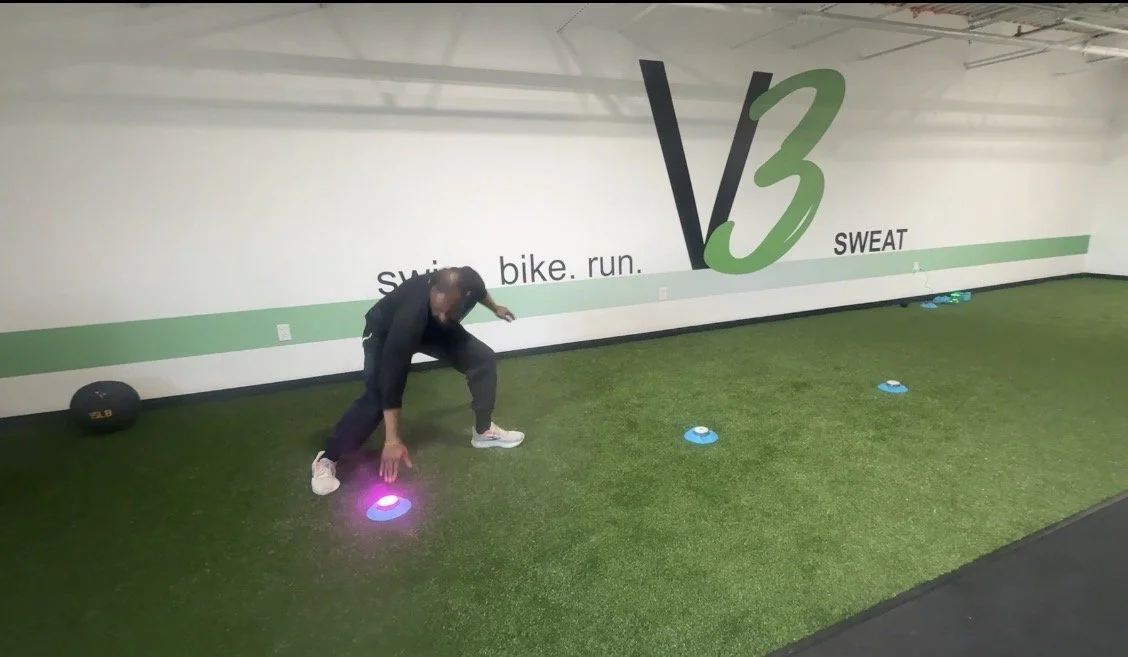
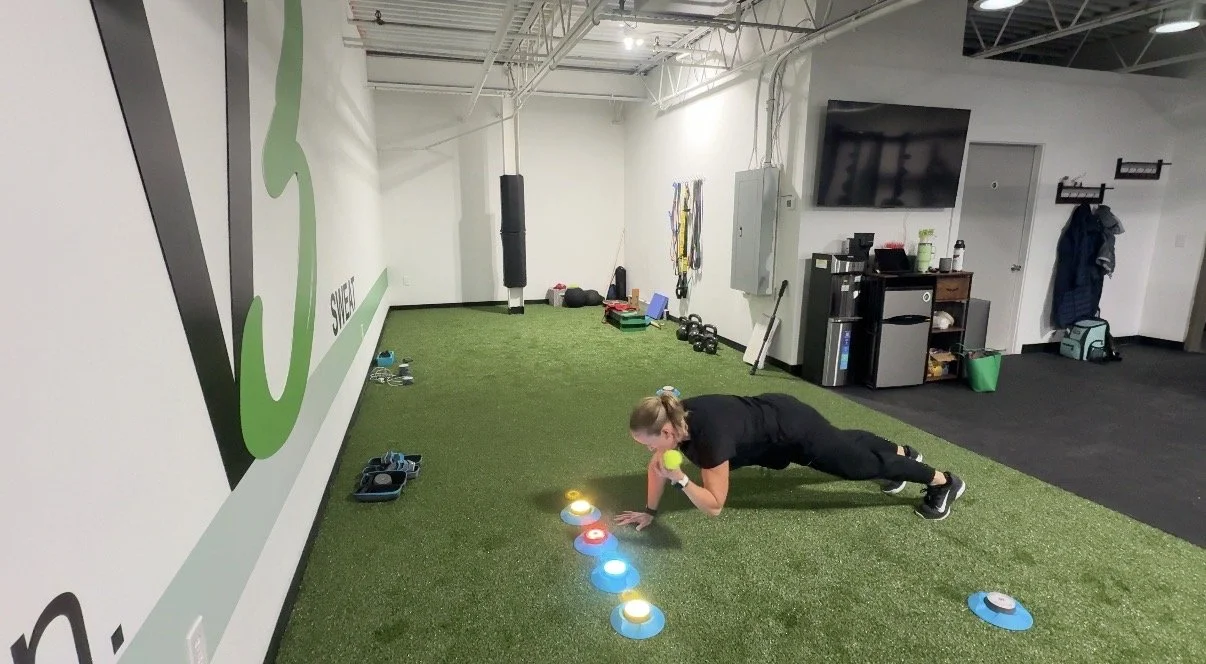
Practicing a physical movement and a cognitive task at the same time — for example, changing direction while reacting to a visual cue or making a split-second decision — so your body and brain learn to work together under real, in-game pressure instead of in isolation.
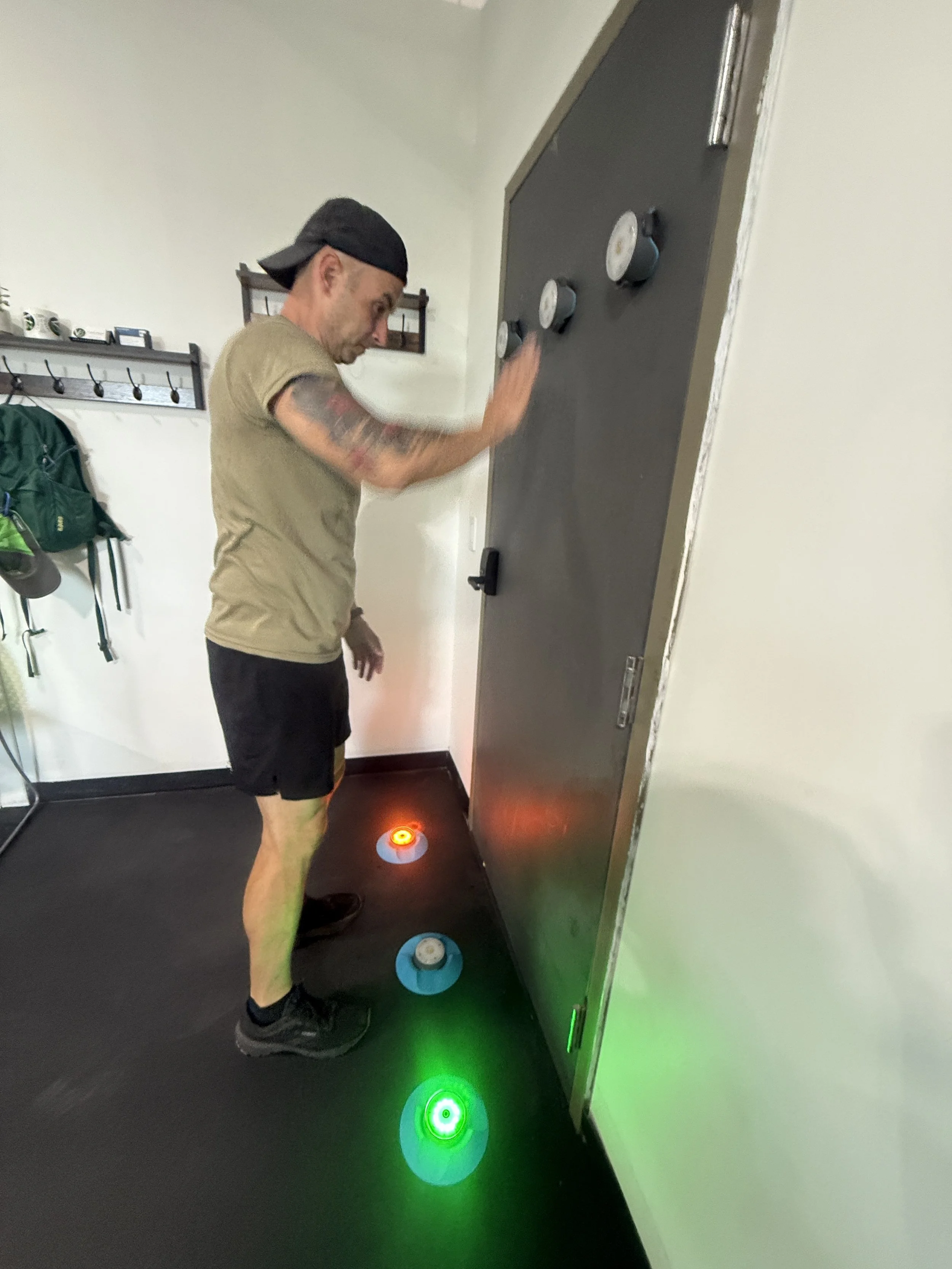
Most rehab and training work the body alone: strength, mobility, control. NeuroCog adds the missing piece — reaction speed, focus under fatigue, and decision-making — using the same neurocognitive methods behind our Core and Cortex platform. It's built into a Comprehensive Assessment, or trained directly in a dedicated NeuroCog Session.
Who it's for
More people than you'd think.
Post-Concussion
Recovering from a concussion
Reaction time, visual tracking, and processing speed are often the last things to fully recover after a concussion — sometimes long after other symptoms have faded. NeuroCog work targets exactly that gap.
Everyday Adults
Anyone whose reactions have slowed
Reaction time and processing speed decline gradually with age, often without anyone noticing until a near-miss makes it obvious. This work is just as valuable for a weekend athlete or an active adult as it is for a professional one.
Competitive Athletes
Field, court & reactive sports
Tennis, soccer, basketball, hockey — any sport where you're reacting to an opponent or a ball in real time benefits from training reaction speed and decision-making directly, not just the physical qualities underneath them.
Tactical & Military
High-stakes, split-second decisions
For operators and tactical professionals, reaction time and decision-making under fatigue aren't performance metrics — they're safety ones. This is the same training Dr. Visintainer brings to Air Force Special Operations.
See if NeuroCog is right for you.
Start with a NeuroCog Session, or bring it up during your Comprehensive Performance Assessment.